
Making your own cold process soap is such a fun activity to do at home or in your lab set up and there are so many benefits of making homemade soap.
Fortunately, we have an online Certificate Cold Process Soap Making course, that teaches you how to make cold process soaps at home for yourself. It is split into two sections, beginners soap making and advanced cold process soap recipes. And we also have a Diploma in Soap Making teaching students to make cold process soaps, hot process soaps, liquid soaps and develop advanced soap swirling techniques.
You might like to check out our article, 6 ingredients used to make cold process soaps as well.
Let’s look at the 6 benefits of making cold process soaps.
6 benefits of cold process soap
1. Zero-waste
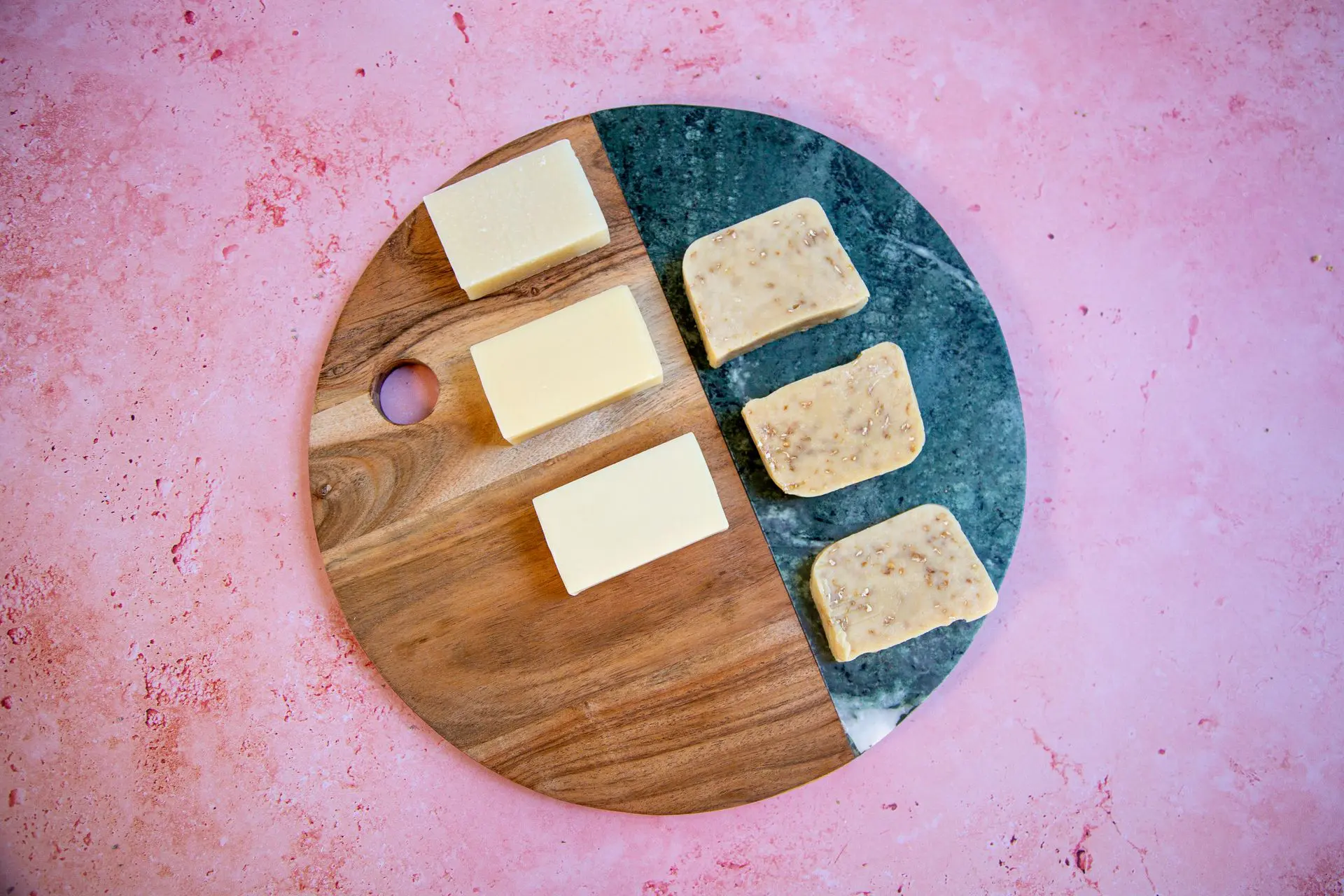
One of the benefits of cold process soaps is that they don’t don’t require any packaging! So, if you are looking for a product type that is sustainable or that has a good eco-footprint, then soap is the perfect solution.
2. Cost effective
Natural soap is inexpensive to make, especially if you are not using high amounts of expensive essential oils and other additives.
Making cold process soap is extremely economical because one batch makes several bars of soap :-). So if you are just making it for personal use, one batch could make enough soap for several months’ use.
A regular-sized bar of soap usually costs less than $1 to make, as typical soapmaking oils and lye are inexpensive. Moreover, a bar of soap lasts a long time, which makes soap a very economical product.
3. Preservative-free
After soap bars have been cured, they still contain some water, and we might expect that water to become the source of microbial growth.
However, water in soap bars is not available to microorganisms as it is bound up in the crystalline structure of soap at the molecular level.
For this reason, it is common to say that soap has ‘low water activity’.
Another aspect that protects soap bars from microbial spoilage is their alkaline pH, which is so high that it is impossible for microorganisms to live in or on it.
Therefore, natural soap bars do not require any preservatives.
4. Long shelf-life
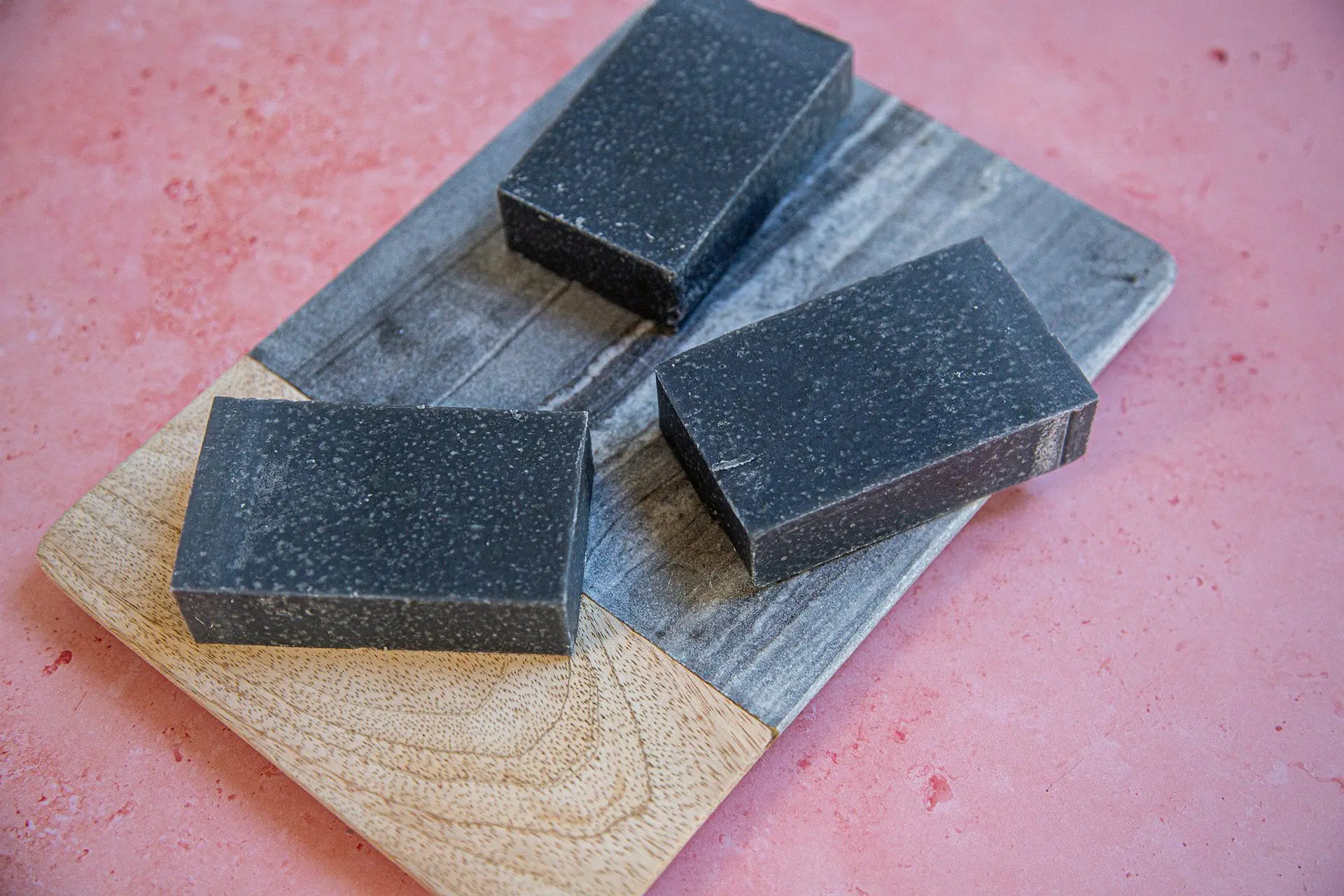
As long as soap bars are stored in a cool and dry space, they can easily have a shelf-life of 6-12 months. If they contain more stable oils or an antioxidant, they can last up to 2 years.
So if you are making larger batches, the soap bars will not go bad before you get a chance to use them. And remember, one batch makes several bars too so it is extremely economical.
5. Economical to make in terms of time
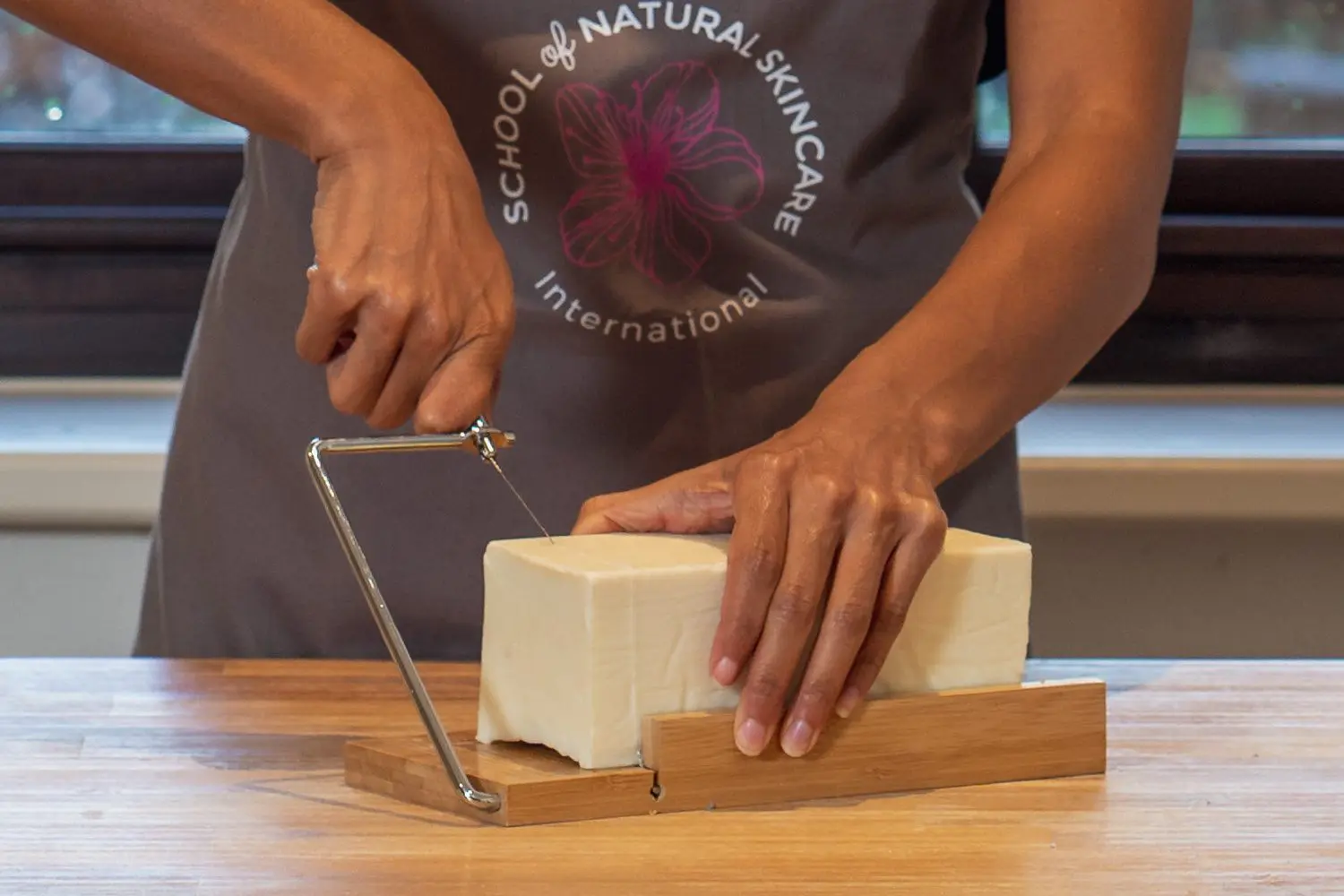
One batch of soap makes many soap bars! It only takes around one hour of hands-on time to make a batch of cold process soap and if you make enough to fill a loaf mold this easily creates twelve bars of soap.
This may be all the soap you need for 3-6 months or more depending on how many people there are in your household and how many bathrooms you have.
6. Gentle and nourishing
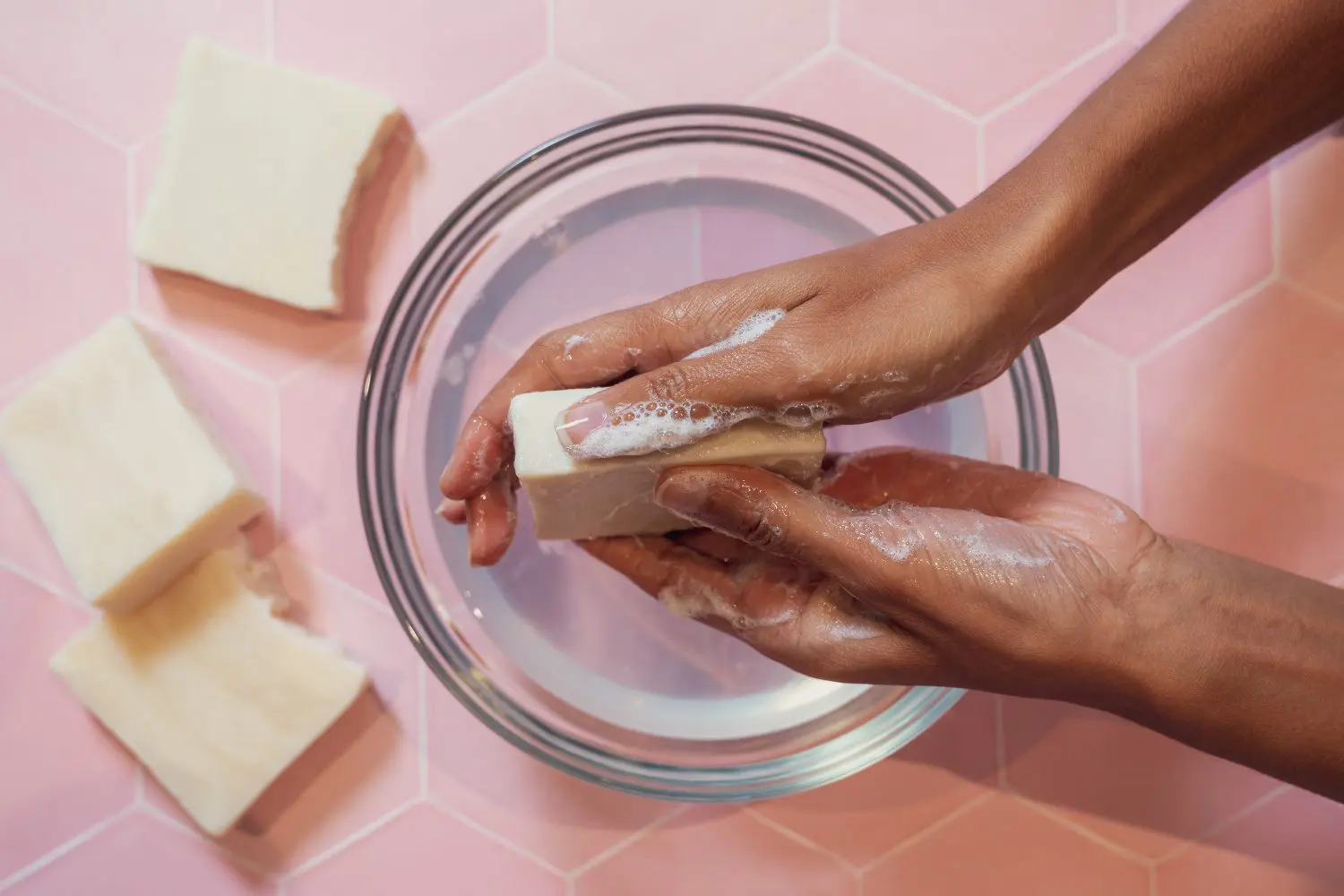
Soaps are not only used as a detergent for cleaning, they can also be nourishing and softening.
The fatty acids that provide the best nourishing and conditioning properties are unsaturated fatty acids, such as oleic, linoleic and linolenic fatty acids. These fatty acids are present in considerable quantities in oils such as olive oil, avocado oil, almond oil, sunflower oil and macadamia nut oil.
Another thing that makes natural soap popular as a gentle cleansing option is the fact that it contains glycerin – a humectant that moisturizes the skin.
The benefits of cold process soap are endless!
How to make cold process soap?
Cold process soap is made via saponification; the chemical reaction that takes place between fat (for example, plant oil, plant butter or animal fat) and sodium hydroxide also called ‘lye’. It’s really important to follow the correct safety guidelines when working with lye.
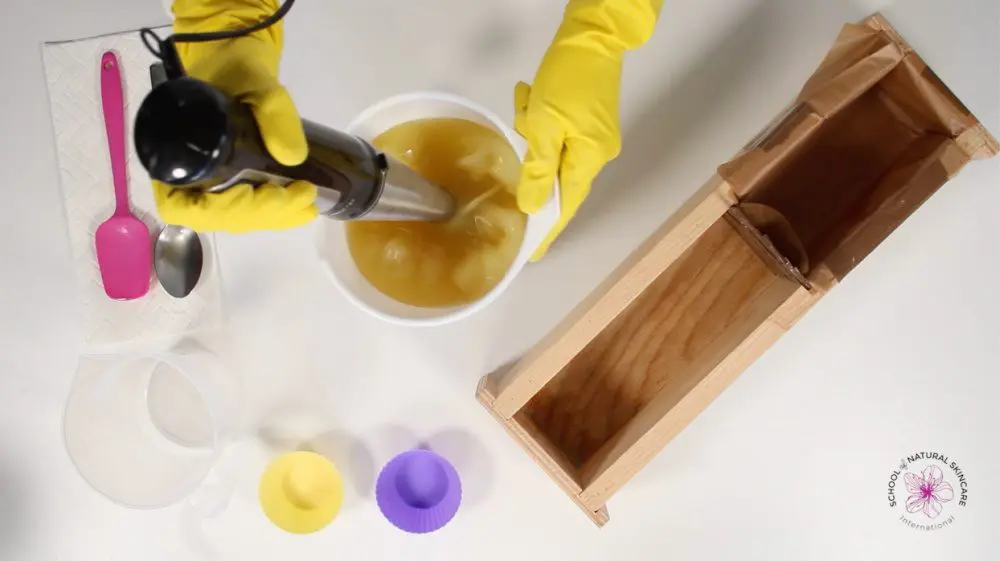
The oils and lye solution are combined and mixed with an immersion blender to set off the saponification reaction. The soap batter is then poured into a mold where the saponification reaction continues over the next few days.
When the soap has hardened it is taken out of the mold and cut into the bars. The bars need to cure for 4-6 weeks during which this time the oils finish saponifying and the bars hardened further.
Beginners should start by following reliable soap recipes and instructions such as the ones we provide in our Diploma in Soap Making and Certificate in Cold Process Soap Making online courses.
Once you are confident making simple cold process soap bars following a recipe you can:
- Use additives in your soap recipe such as colors, fragrance and exfoliants.
- Move on to create your own recipes and formulate your own soap. This requires understanding the properties different oils give to soap and carrying out some calculations using the saponification value of your chosen oils and butters.
- Experiment with different cold process soap designs and soap swirl techniques.
If you have any questions about our school or enrolling on the Diploma in Soap Making or the Certificate in Cold Process Soap Making, including which course is right for you, please send our customer service team an email using [email protected].

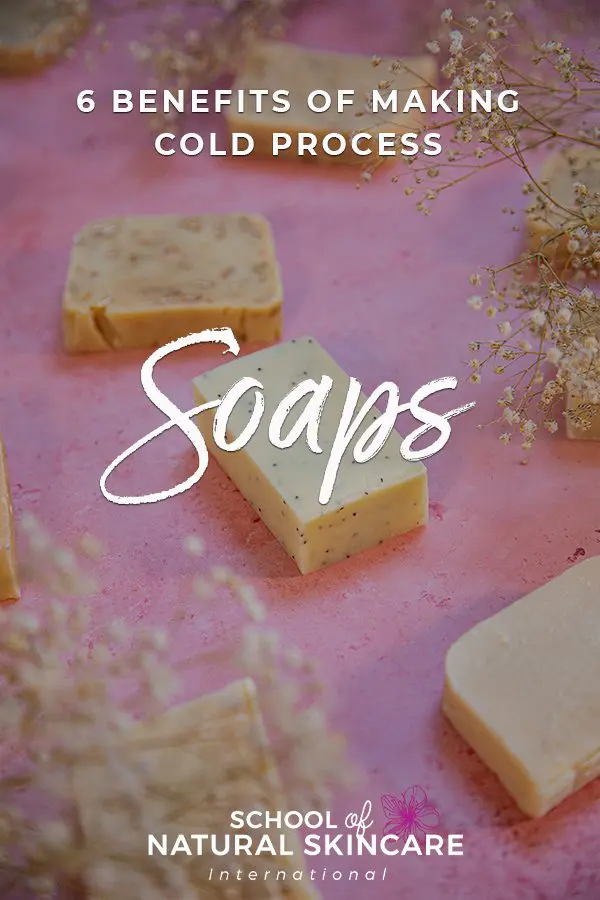
Loved reading about the benefits of making cold processed soaps? Make sure to remember them by pinning this!