
With the extra hand washing we are all doing right now, many people are experiencing dry and sore hands.
Our advice?
- Check whether your handwash/soap contains SLS (sodium lauryl sulphate).
- If it does, find an alternative.
This quick blog post will explain why you may choose to avoid SLS, and give you some alternatives.
How does soap kill the coronavirus?
If you are interested in understanding why hand washing is being promoted so strongly right now, here is a good article that explains the science of soap: The science of soap – here’s how it kills the coronavirus. In brief, “the virus is a self-assembled nanoparticle in which the weakest link is the lipid (fatty) bilayer. Soap dissolves the fat membrane and the virus falls apart like a house of cards and dies – or rather, we should say it becomes inactive as viruses aren’t really alive.”
Avoiding handwash with SLS (sodium lauryl sulphate)
SLS (sodium lauryl sulphate) is one of the cheapest and strongest surfactants used in skin care; it is also one of the most irritating. It is found in many cosmetics, especially in shampoos, body washes and handwash. Surfactants, like SLS, function as detergents; they have the ability to remove dirt and grime (and viruses) from a surface.
Many handwashes contain SLS as the main cleansing agent. Check the ingredient list on the handwashes you are using. Can you see it?
Studies on skin irritation of surfactants show that irritation is dependent on the structure of the sulphate. SLS is an anionic detergent, which tends to be more irritating to the skin and eyes in comparison to amphoteric and non-ionic detergents (L. Rhein, 2007).
Their ability to remove stratum corneum lipids means they penetrate the skin deeper into the viable layers and can cause immune reactions (Lémery et al, 2015).
In an effort to make SLS less irritating, chemists created SLeS, which is produced through a process of ethoxylation. This resulted in a surfactant that is indeed less irritating to the skin, but is regularly contaminated with 1,4-dioxane, a carcinogen byproduct of the chemical reaction.
In addition, SLS and SLeS are also known to elicit skin reactions such as irritant contact dermatitis, and may cause inflammation. Though emulsions are often used to treat inflammatory skin disorders such as eczema, emulsions may also cause skin disorders because of the presence of surfactants added as stabilizers (Bárány et al, 2000).
If your handwash does contain SLS (or SLeS), switch to a more gentle soap.
Two hand soap options that are less drying and irritating than SLS
1) Bar soap
Traditional cold-process bars of soap contain high amounts of glycerin as a natural byproduct of the saponification process. Glycerin is a humectant that helps moisturize the skin.
Soaps can also be nourishing and softening. The fatty acids that provide the best nourishing and conditioning properties are unsaturated fatty acids, such as oleic, linoleic and linolenic fatty acids. These fatty acids are present in considerable quantities in oils such as olive oil, avocado oil, almond oil, sunflower oil and macadamia nut oil so look for soap made with these oils.
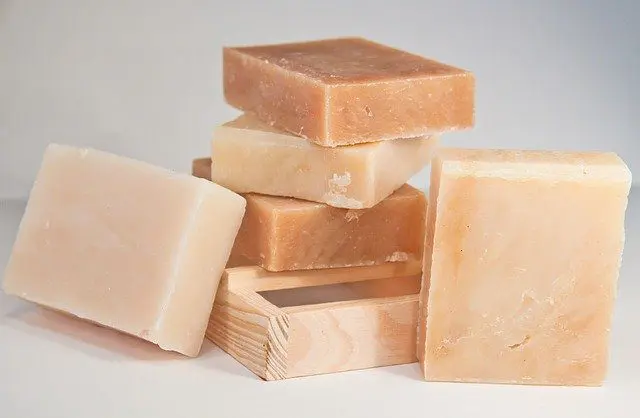
Soap bars generally have a pH between 9 and 10 and some people worry that this is too high for the skin since the pH level of the skin is around 5. However, while it is true that using soap increases the pH on the surface of the skin, our skin has a natural ability to regulate pH, and over time it will return to healthy acidic levels (typically taking 20 minutes to two hours).
An added bonus of soap bars is that they can be free of plastic packaging.
Support your local artisan soap makers by buying soap directly from them!
2) Handwash with gentle surfactants
Switch your SLS-based hand soap to one made with more gentle surfactants. There are many alternatives to SLS, some of which are more gentle and less irritating.
Alternatives to SLS include surfactants such as:
- Decyl glucoside.
- Lauryl glucoside.
- SLSA (sodium lauryl sulfoacetate).
- Sodium Cocoyl Glycinate.
- Disodium/Sodium Cocoyl Glutamate.
Check some handwash ingredient labels and see which surfactants they use. If it seems quite confusing, simply look for one that doesn’t use SLS.
Our personal favorite handwash? We like Avalon Organics Handwashes. This isn’t an affiliate link, simply a product we like and have used for years without experiencing any drying or irritating affect.
Glycerin is your friend!
Humectants attract water from the atmosphere to the skin and bind it there, which hydrates and moisturizes the skin. Glycerin is the most easily accessible and inexpensive humectant and is commonly plant derived.
Traditional, cold-process soap contains good amounts of glycerin and many liquid hand soaps contain it, too. Check the ingredient label and if you see glycerin, you’ll know it’ll help keep your hands moisturized.

References
- L. Rhein, 2007, C.3 – Surfactant Action on Skin and Hair: Cleansing and Skin Reactivity Mechanisms.
- Emmanuelle Lémery, Stéphanie Briançon, Yves Chevalier, Claire Bordes, Thierry Oddos, Annie Gohier, Marie-Alexandrine Bolzinger, March 2015, Skin toxicity of surfactants: Structure/toxicity relationships, 469:166-179.
- E. Bárány, M. Lindberg, M. Lodén, 2000, Unexpected skin barrier influence from nonionic emulsifiers, Int. J. Pharm., 195 (2000):189-195.